From aisle to algorithm: The beauty categories, channels, and concepts shaping 2030 growth
For both brands and retailers, beauty’s competitive landscape is in flux: Players with novel products, as well as new entrants from adjacent categories, are gaining ground against incumbents. And as product discovery and purchase migrate toward creators, social platforms, and digital marketplaces, legacy beauty channels such as department stores and specialty retail chains must find new ways to attract and retain shoppers.
Last year, we described a beauty industry that faced rising pressure from value-conscious consumers, intensifying competition, and higher marketing costs. But the industry’s growth outlook has remained steady: The global beauty market is again expected to grow by 5 percent annually, reaching $590 billion by 2030, in line with previous projections. Even so, the industry is entering a phase of disruption.
Based on a new McKinsey analysis1 of the global beauty sector and sales data, we examine the state of the market, describe the rapidly changing channel landscape, and highlight the strategic choices retailers and brands will need to make to position themselves for success in the years ahead.
The 2030 beauty market: Fragrance surpasses color cosmetics to become the third-largest category
According to our latest analysis, the global beauty market is on track to grow by 5 percent annually through 2030, supported by resilient consumer demand and continued expansion across regions. We expect growth to be strongest in emerging markets, particularly Latin America and Southeast and Central Asia, where consumers are becoming wealthier and demand for beauty products is increasing. Europe, meanwhile, will likely see more balanced growth through 2030. While price increases and premiumization drove much of the region’s growth over the past several years, brands are likely to pull back on further increases, in large part due to consumer price sensitivity, selective trading down, and the uptake of more affordable products. As a result, we expect volume gains to play a larger role in Europe, despite economic uncertainty and geopolitical concerns.
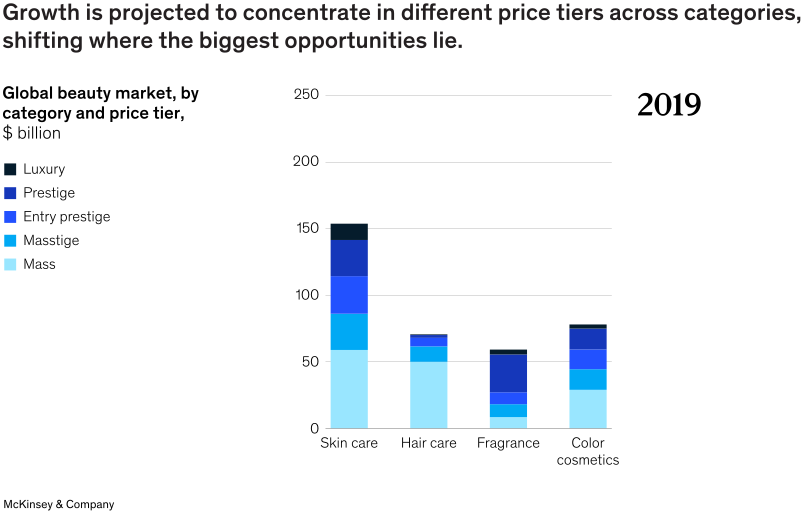
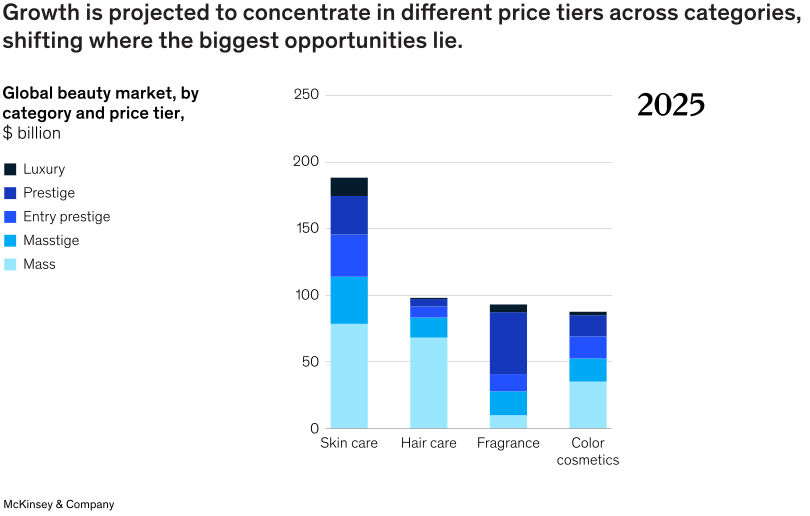
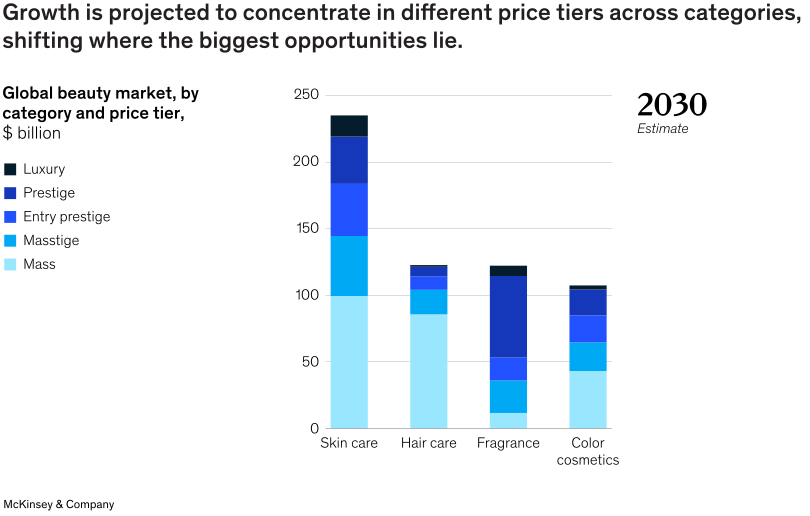
Fragrance remains strong across most price tiers, fueled by sustained demand for prestige and niche scents, the rise of masstige and entry prestige challengers, and the continued appeal of designer fragrance brands. Overall, the category remains oriented toward premium offerings, with relatively few mass players. Growing interest in fragrance is evident in the new ways consumers are engaging with the category—for example, creating “fragrance cocktails” by layering scents and wearing different scents throughout the day or on different parts of the body.
Color cosmetics, meanwhile, is regaining momentum after years of minimalist makeup trends. Renewed consumer interest in bolder looks, as well as the expansion of hybrid makeup–skin care products, will likely support category growth, though consumers’ continued focus on skin care is expected to keep color cosmetics growth lower than that of other beauty segments.
While these projections focus on the four core beauty categories, consumers’ new, holistic mindset around beauty is expanding the market’s boundaries.2 Beauty purchases are becoming more integrated into daily routines, occasions, and overall well-being, driving demand not only in adjacent beauty categories (such as bath and body, sun care, and nail care) but also in wellness categories (such as functional nutrition, sleep care, and supplements) and medical and aesthetic services. Advanced at-home treatments and tools—including LED masks, radio frequency tools, and at-home laser treatments—are also gaining popularity.
And as more people adopt GLP-1-based weight-loss treatments, their beauty needs are changing. Companies are launching and repositioning products across categories to meet these needs. Examples include skin care products targeting facial volume loss and dehydration, as well as hair care products and supplements that address thinning hair. GLP-1 households spend an estimated 30 percent more on beauty products than non-GLP-1 households.3
A competitive reset: Digital channels could exceed specialty retail in the United States
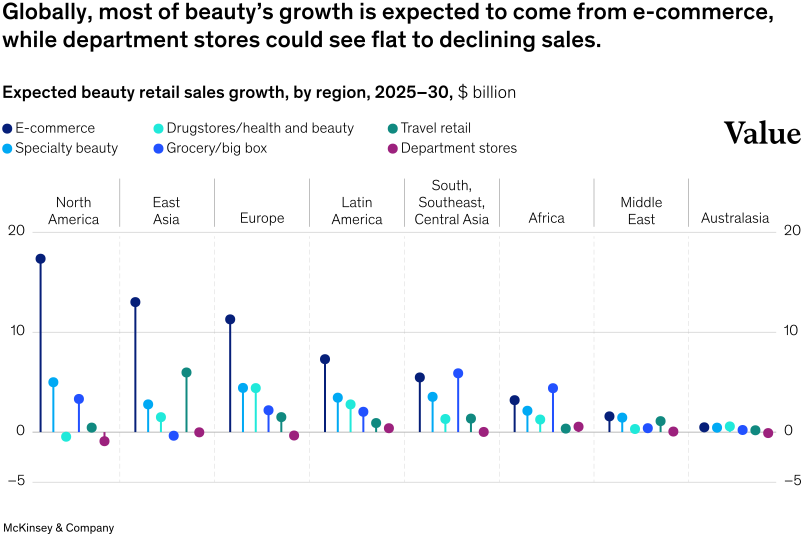
In recent years, beauty distribution has steadily shifted toward e-commerce and omnichannel models. Today, that evolution is giving way to a profound restructuring of the channel landscape, as consumers increasingly use social commerce, digital marketplaces, and agentic commerce to discover brands and make purchases. At the same time, the lines between various channels are blurring.
Across regions, we expect e-commerce to account for the majority of beauty’s sales growth through 2030 (Exhibit 2), fueled in part by the acceleration of social commerce and the emergence of agentic commerce.
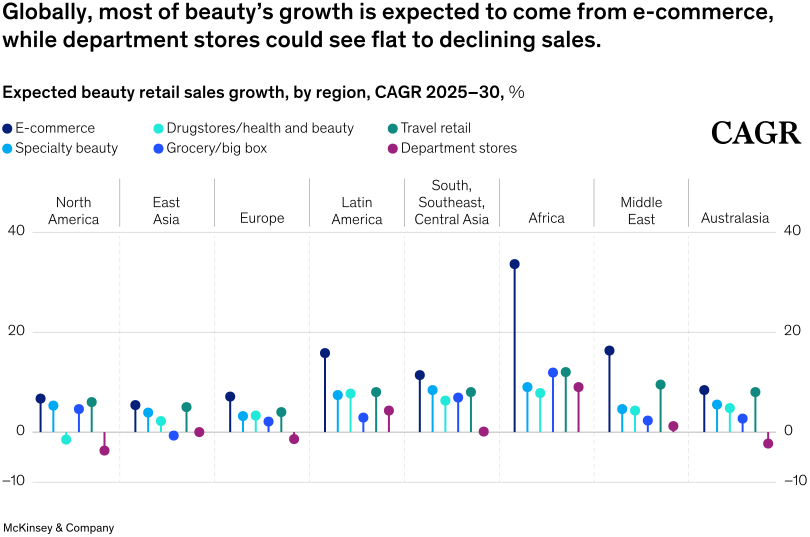
The implications of the changing channel landscape are already becoming visible. In the United States, four retailers make up just under half of the beauty market: Amazon, Ulta Beauty, Sephora, and TikTok. This year, Amazon and TikTok’s combined core beauty sales could surpass the combined sales of Sephora and Ulta Beauty. Beauty sales on TikTok have grown at triple-digit rates since 2023 and are on track to reach $4 billion in 2026. While TikTok accounts for only about 2 percent of US beauty sales today, it is the fastest-growing beauty retailer: Sales on the platform have risen approximately 260 percent annually since 2023. Skin care has led that growth, expanding nearly 300 percent over the same period, alongside strong momentum in fragrance and makeup.4
Brands and retailers are already capturing significant value from TikTok. A number of retailers, including Ulta Beauty and Sally Beauty, have launched native TikTok storefronts, and in some cases, TikTok Shop (the term for the platform’s commerce feature) has accounted for as much as 10 percent of individual beauty brands’ sales. Yet the platform’s long-term economics remain an open question. Promotions, affiliate commissions, and highly aggressive customer acquisition tactics are driving much of TikTok’s growth, leading some brands to wrestle with whether to use the channel as a sales engine, a marketing vehicle, or both. The economics currently favor brands built specifically for the platform—with margin structures, pricing architectures, and rapid product cycles designed to support social commerce at scale.
However, brands that avoid TikTok altogether risk losing visibility and share as discovery shifts toward creator-led channels. First movers on TikTok, for their part, may continue to benefit from relatively limited competition on the platform. As larger beauty players increase investment in the channel, the economics of customer acquisition and visibility could become more challenging for smaller brands—much as they did when paid social and search advertising became more crowded and expensive during the direct-to-consumer beauty boom a decade ago.
Within TikTok, some content formats drive higher sales than others. Shoppable video5 currently accounts for the largest share of beauty sales on the platform (66 percent), but live streaming is also significant—representing roughly 22 percent of US sales—and continues to scale (see sidebar, “Beauty’s global live streaming opportunity”).6
For brands, the evolution of TikTok and Amazon as discovery and purchase channels calls for a rethinking of channel strategies. Social media is no longer just a marketing channel but a commercial capability spanning merchandising, creator partnerships, customer engagement, and conversion.
On TikTok, discovery at scale is becoming as much of a focus for brands as product replenishment. Creator-led storytelling, viral hero products, and shoppable content are influencing which brands consumers encounter and try for the first time. Products that offer novelty—for instance, through unique ingredients such as snail mucin—or deliver clear, visible outcomes are more likely to translate into compelling digital content and drive engagement. Korean skin care brand Dr. Melaxin’s “clinic in a product” solutions, for example, feature spicule-based treatments7 that produce highly visible effects, including skin peeling. These near-instantaneous results are well suited for short-form video content, which has contributed to the brand’s rise: Dr. Melaxin grew from zero to a 10 percent share of the US skin care category on TikTok Shop between 2024 and 2025, generating approximately $57 million in revenue.8
On Amazon, meanwhile, search, live streaming content, and the company’s emerging AI-powered shopping tool, Alexa for Shopping, support both discovery and purchase. Some brands, such as Korean beauty company Medicube—which was the number-one beauty brand on Amazon and TikTok Shop in the first quarter of 2026—are finding ways to funnel demand that originates on social media to Amazon. Medicube often has creators direct their audiences to its Amazon storefront.
As consumers move fluidly across platforms, channel lines are blurring. Products that were once sold exclusively in department stores or specialty beauty retailers are now appearing at mass retailers and online marketplaces alike. And as consumers increasingly shop across price points rather than staying within a single tier or channel, retailers are expanding their assortments to capture a greater share of beauty spend. At the same time, consumers have become more value conscious and more informed about products, ingredients, and efficacy claims, making them more willing to mix prestige and mass purchases into their beauty routines. According to a McKinsey analysis, about 20 percent of brands at US specialty beauty retailers are also stocked at Walmart.
The blurring of channel lines creates both opportunities and risks. As assortments become more similar across retailers, owned brands, exclusive products, and differentiated merchandising will become important competitive advantages. Without a differentiated assortment or shopping experience, consumers are more likely to default to the retailer offering the best value or greatest convenience, particularly for replenishment purchases.
For brands, the concern that selling through a mass-market channel could hurt brand equity may no longer be relevant. In our most recent beauty survey, about half of US consumers said channels including drugstores, discounters, beauty specialty retailers, and department stores are “great for both mass and premium brands.”9 Success here will depend on smart assortment strategies (such as exclusive sizes or kits) that cater to different channel contexts, as well as on elevating the perception of value for money (for instance, through premium active ingredients with proven efficacy). Product bundles, performance-driven claims, and tailored pricing strategies can reinforce accessibility without undermining brand equity.
Consider Daiso, a South Korean low-cost retailer that has become a credible beauty destination by partnering with premium brands to launch channel-exclusive, value-driven sublines. Rather than discounting core SKUs, brands create “little sister” lines with simplified formulations and pared-back packaging to meet Daiso’s $4 price ceiling. This model has proven highly effective: launches from Jung Saem Mool and Too Cool For School have sold out within hours, while sales of Amorepacific’s Mimo by Mamonde surpassed one million units shortly after launch. Daiso’s beauty sales grew 70 percent in 2025, with momentum continuing into 2026 (comparable year-over-year sales in January 2026 were up 30 percent).10
Rather than simply resizing SKUs, brands build distinct sublines tailored to a tighter cost structure and value-minded consumer, turning price pack architecture into a scalable customer acquisition strategy.
Finally, while agentic commerce is still emerging, it represents a meaningful opportunity for beauty players. AI platforms could drive up to 35 percent of e-commerce transactions over the next three to five years, and retailers and marketplaces are already embedding AI shopping assistants to capture demand. In beauty, agents are likely to play a complementary role in search and consideration—helping consumers navigate the never-ending digital aisle, compare ingredients and efficacy claims, and identify products suited to specific needs or routines.
This shift will require brands to move beyond traditional search engine optimization toward generative engine optimization, which means structuring product content—across ingredients, benefits, clinical validation, and use occasions—in ways that AI systems can interpret and recommend. Rather than optimizing for keywords alone, leading brands will need to align their product narratives with how consumers ask questions, ensuring they surface in AI-generated recommendations across platforms. Consumers are also using large language models to identify which ingredients or products to avoid, raising the importance of transparent labeling, ingredient disclosure, and strong ratings on third-party transparency platforms.
Beauty’s next chapter: Considerations for brands and retailers
Beauty’s growth story continues, but the sources of competitive advantage are shifting. Consumers are moving more fluidly across categories, channels, and price tiers, while discovery, content, and commerce increasingly converge into a single experience. In this environment, brands and retailers can no longer rely on legacy positioning, distribution advantages, or broad awareness alone.
For brands, this raises a set of urgent questions: Does the product proposition translate clearly in social and digital environments? Is the brand showing up wherever consumers discover beauty today, both online and in stores? And can the brand continue to generate the kind of novelty, credibility, and visible results that consumers increasingly expect?
Retailers face a different challenge. As assortments become more similar across channels, differentiation will depend less on access to brands and more on curation, experience, trust, and convenience. Retailers will need to determine how in-store guidance, creator content, AI-powered personalization, and exclusive offerings can give consumers a reason to choose them over a marketplace, social platform, or competing retailer.
As the boundaries between beauty, wellness, services, content, and commerce continue to blur, the companies that thrive will be those that treat these changes as an opportunity to create new sources of value and adapt fastest to how consumers now discover, evaluate, and buy.